Currently, Synchrony offers low monthly payments and many financing options. You can have your home repaired now and pay later with one of Synchrony's six monthly payment programs.
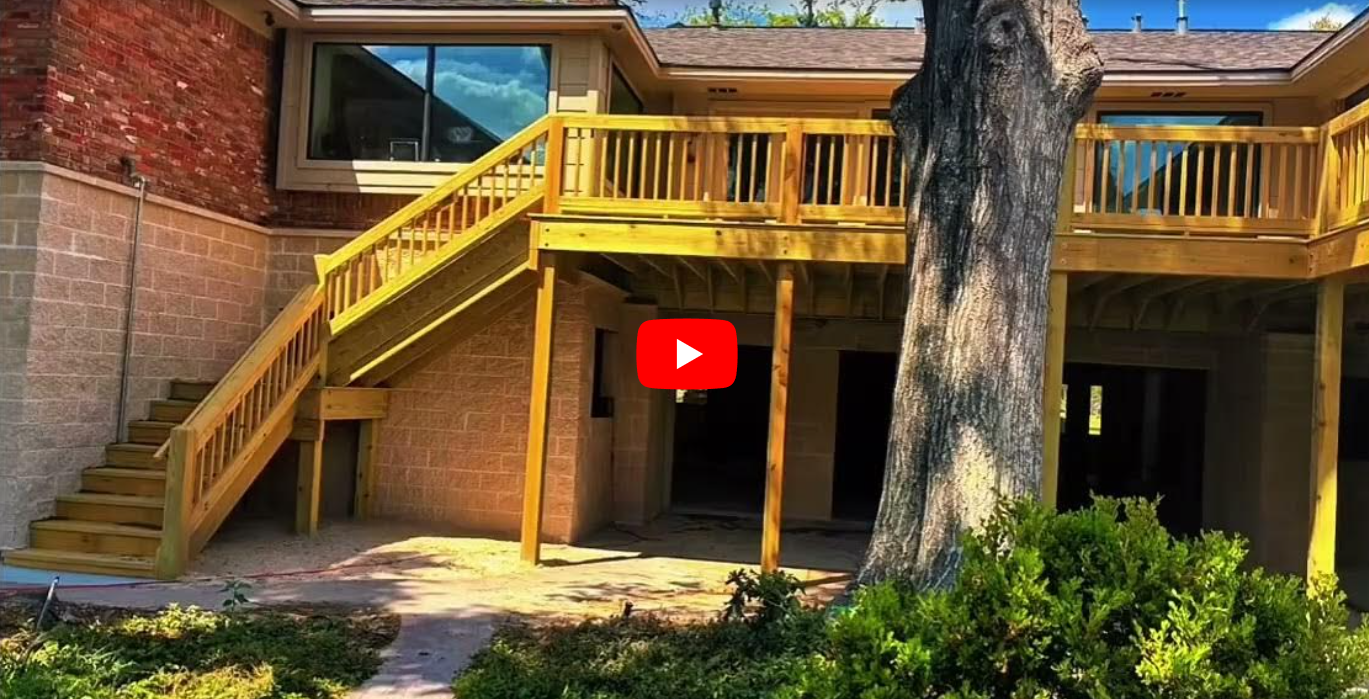
Since the 80’s, Houston residents have trusted Allied Foundation to take care of their foundation problems as well as provide preventative measures to preserve the structural integrity of their homes. As all Houstonians know, this area is prone to flooding, and that is why house lifting is a necessary service in our area.
Our accurate assessments and reasonable quotes helped many homeowners elevate their homes through one of FEMA’s grant programs that Allied Foundation is actively apart of nowadays.
Currently, we provide grant home elevation services for Brazoria County, Galveston County, as well as in the city limits of Houston.


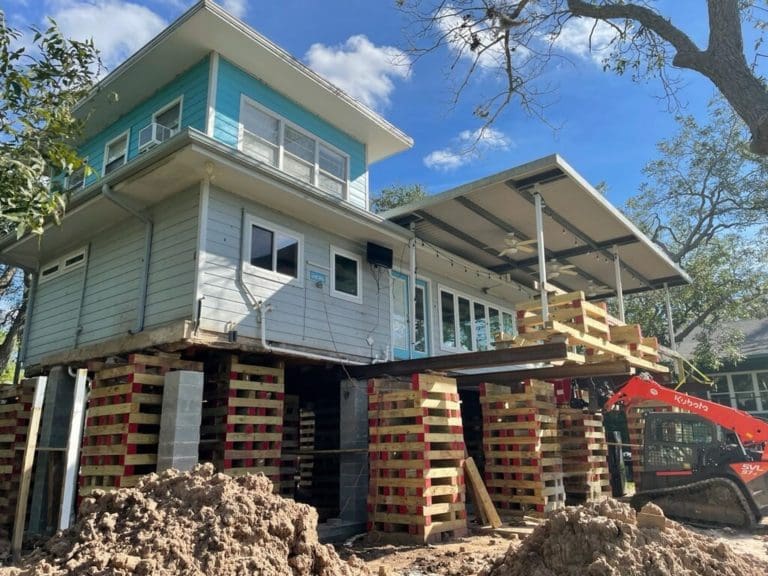
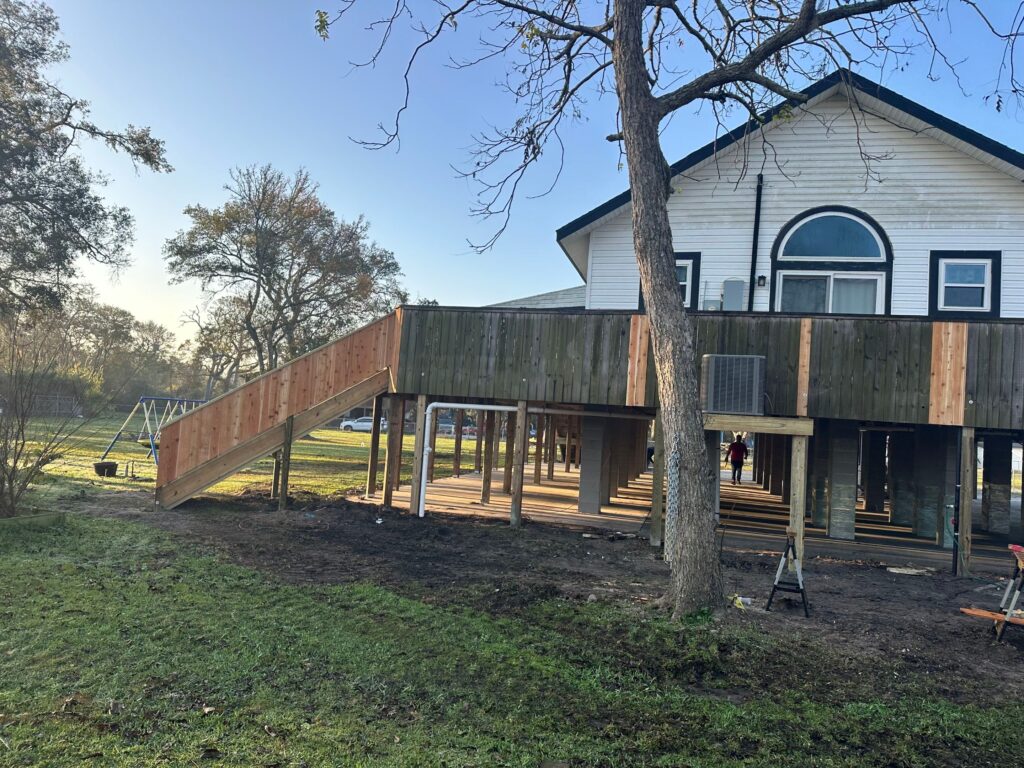
House Lifting or House Elevation – is when the entire structure of a home is vertically lifted above or beyond the Base Flood Elevation (BFE). The house or dwelling that is being lifted will then be protected from future flood damage.
To prevent their properties from potential flood damage, many homeowners decide to have their homes lifted out of harm’s way. The average process of a one-story home to be lifted is a minimum of 2 to 4 feet that can be completed between 45 to 75 days.
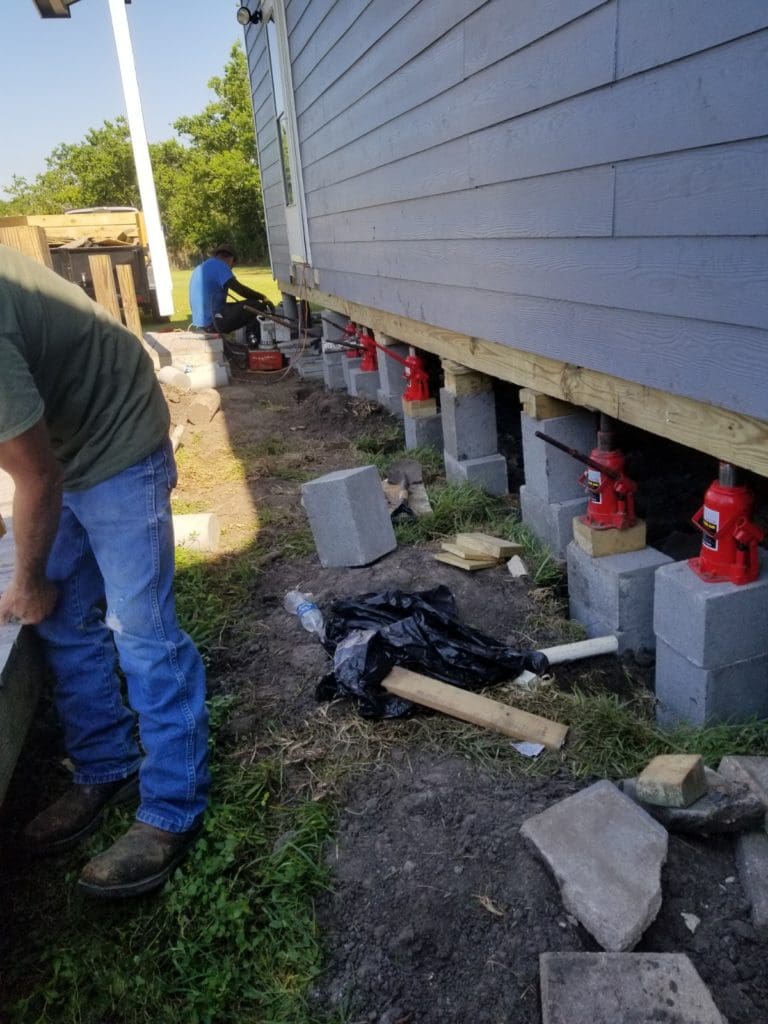
The house is lifted in one piece by using the Unified Hydraulic Jacking Machine Method. By utilizing this method, the structure’s risks of damage are minimal. During the actual lifting of the home, the residents are not permitted to be in the home for safety reasons. It is recommended for residents to reside outside of the home while the lift is being performed, but once the elevation is completed the residents may stay inside throughout the remaining time of the project. The contents in the interior of the home are not disturbed, and there is no need for belongings as well as furnishings to be removed for the lifting of the home.


After your home has been evaluated by our project manager, we will file the proper paperwork. We also collaborate with licensed surveyors and engineers with extensive experience in home elevation projects. These professionals will prepare all the engineering and architectural drawings that are required in order to obtain a construction permit for the lifting of your home.
Once the permit and the notice to proceed are issued, we’ll deliver all the materials and equipment necessary to the job site within 14 days. As soon as the materials and equipment are on site, our crew will get to work.
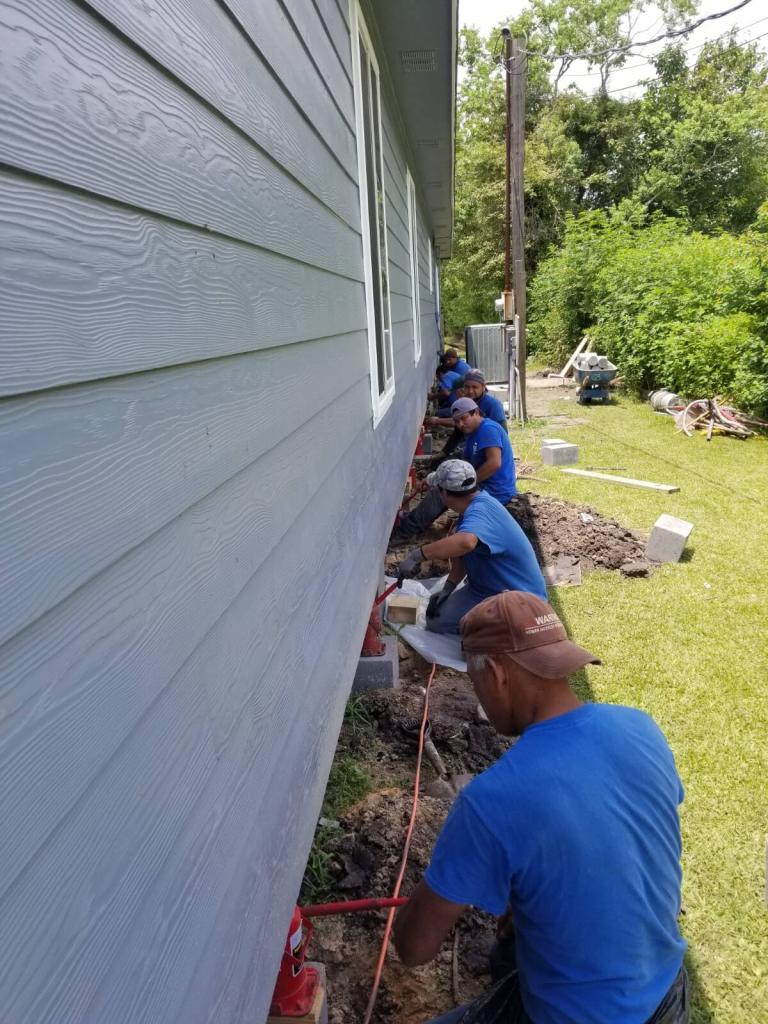
The first course of action will be to tunnel under your home in order to gain access to existing beams. Then, new concrete piers will be put in place, pushed into the ground, and driven to a “point of refusal”. Once the structure is set in place, the Unified Hydraulic Jacking Method will begin. This is a slow and methodical process that can’t be rushed. As the home is raised, additional support is placed underneath to ensure stability.
After the completion of each stage described above, the foreman and one of our experienced inspectors will conduct a quality inspection on site to ensure strict compliance with FEMA and HUD guidelines as well as local building codes. Once the inspector confirms that the work meets all the standards and technical specifications included in the customized elevation plan for your property, the crew will move the job along to the next stage. As soon as your home is at its final height, the work will be thoroughly inspected by the project manager as well as the city & Engineer of record. If the work is deemed satisfactory, the residents are permitted to reenter the home.
When it comes to home elevation projects, a safe lift mostly depends on the workers on site. Because safety is particularly important when lifting a home, we have our own workers who completed extensive training for this kind of project. Furthermore, all new employees are extensively trained on the job by our highly skilled specialists, who have decades of experience in excavating, pushing piles in the ground, and pouring foundations. This way, each worker can learn the practical skills and knowledge he needs in order to perform the job safely.
In order to provide outstanding services, quality workmanship, and on-time job completion, our crews also use the newest equipment, including our own state-of-the-art Unified Hydraulic Jacking Machine, apply the most advanced elevation methods, and practice the highest safety standards for every project we work on.
As we have our own personnel, we’re also able to ramp up or down each crew to fit the scope and size of any project. For instance, we have the flexibility to form pre-construction crews of only 3 or 4 men, excavating or tunneling teams that include 15 men, as well as house lifting crews of 20 men or more. In addition to the personnel in the field, we have an experienced office team that performs all of the pre-construction tasks required, including surveying, engineering, as well as getting permits and elevation certificates. Once we take on your house elevation project, you can rest assured knowing that we have the staff and experience necessary to get everything done right, quickly and effectively.
After your home has been raised to the desired height and is stable, we will begin rebuilding the bottom layer, so your home looks even better than it did before at ground level. Just as we do with our foundation repair services, we believe in leaving your home looking just as nice as, if not better than, it looked before we started working on it.
The safety and satisfaction of our customers are of the most importance to Allied Foundation. To find out more about our home lifting service, contact us today!

foundation, construction, concrete, basement, flood, federal emergency management agency, elevator, steel, flood insurance, soil, home insurance, floor, basement waterproofing, electrician, drywall, accessibility, concrete slab, natural disaster, wall, building code, foundation repair costs, foundation repair cost, foundation repair, house lifting contractors near me, house lifters near me, house lifting companies near me, house raising companies near me, house raising contractors near me, house raising near me, house lifting services near me, raise house foundation, house raising, house lifting services, house lifting companies, general contractor, floodplain, renovation, waterproofing, long island, masonry, new york city, national flood insurance program, hurricane sandy, inspection, drainage, chimney, home improvement, pier, bathroom, risk, wood, house lifting contractors, sea level, expense, yard, fee, landscaping, contract, pressure, porch, lifting engineers, raising a house, contractors, rising, building jacking, house raising contractors, raise foundation house, house lifting, house lifting cost, emergency management, surveying, price, plaster, attention, statistics, erosion, heavy equipment, home construction, property, deep foundation, water damage, roof, concrete block, environmentally friendly, general, foundation work, house jacking near me, sill plate, height, safety, joist, coast, machine, sea level rise, pump, structure, civil engineering, polyurethane, regulation, complexity, sill, helical piles, lifting company, small lift for home, house lift cost, single person lift for home, building lifting, disaster, eastern united states, hazard, barn, foam, commercial foundation repair, foundation repair company, concrete lifting, free estimate, differential settlement, foundation lifting, warranty, carbon, soil compaction, settlement, push piers, repairs, helical piers, armani designer lift foundation, la mer cushion foundation, la mer cushion, giorgio armani designer lift foundation, armani designer lift, lancome renergie lift foundation, designer lift foundation, loreal visible lift, la mer luminous lifting cushion foundation, giorgio armani designer lift, weight
house raising, foundation lifting, foundation raising, house lifting cost, house raising companies, house lifting services, house lifting companies, foundation repair near me, allied foundation, allied foundation repair
House elevation is a critical service for homeowners in flood-prone areas, as it significantly reduces the risk of water damage during severe weather events. By raising a home above potential flood levels, homeowners can safeguard their property and ensure long-term stability and safety.
In addition to protecting against flooding, elevating a house can also enhance property value and improve overall livability. Many insurance companies recognize the benefits of house elevation, often providing better coverage rates for elevated homes, thus leading to potential savings on insurance premiums.
There are several misconceptions surrounding house lifting, such as the belief that it is an overly complicated and expensive process. In reality, house elevation can be a straightforward and cost-effective solution when performed by experienced professionals who understand local regulations and requirements.
Another common myth is that house lifting can compromise the structural integrity of the home. However, with proper techniques like the Unified Hydraulic Jacking Method, homes can be lifted safely and securely, preserving their structural soundness while enhancing their resilience against environmental risks.
Many homeowners may be concerned about the costs associated with house elevation, but there are various financing options available to make the process more accessible. Programs may include low-interest loans, grants, or assistance through local government initiatives aimed at flood mitigation.
Additionally, some contractors offer flexible payment plans that allow homeowners to manage their budgets effectively while ensuring that their homes are protected from flood risks. Exploring these options can help alleviate financial burdens and encourage more residents to invest in necessary elevation services.
Selecting a qualified contractor for house lifting is crucial for ensuring a successful elevation project. Homeowners should look for contractors with extensive experience, positive customer reviews, and proper licensing and insurance to guarantee that the work meets safety and regulatory standards.
It is also beneficial to request detailed estimates and timelines from potential contractors, as this transparency can help homeowners make informed decisions. Engaging with contractors who provide clear communication and demonstrate a commitment to quality workmanship can lead to a smoother and more satisfactory house lifting experience.