
What Is a Pier Foundation? Understanding Types, Problems, and Repair Costs
A pier foundation is a deep foundation that transfers a building’s load to deeper, more stable soil layers. It is useful where surface soils are weak or prone to movement, and helps keep structures stable in challenging ground conditions. This article covers pier types, signs of foundation trouble, common repair methods, and typical costs, information especially relevant for homeowners in Houston.
Knowing how foundations transfer loads into stable soil is key to designing effective support systems.
Deep Foundation Load Transfer for Buildings
This study highlights the limits of shallow, semi-deep and deep foundations and illustrates the load-transfer mechanism for the discussed foundation system (A Eslami, 2026). Form and load transfer aspects of foundation systems: Case‐based implementation and adaptation for buildings, A Eslami, 2026
What Are the Different Types of Foundation Piers?
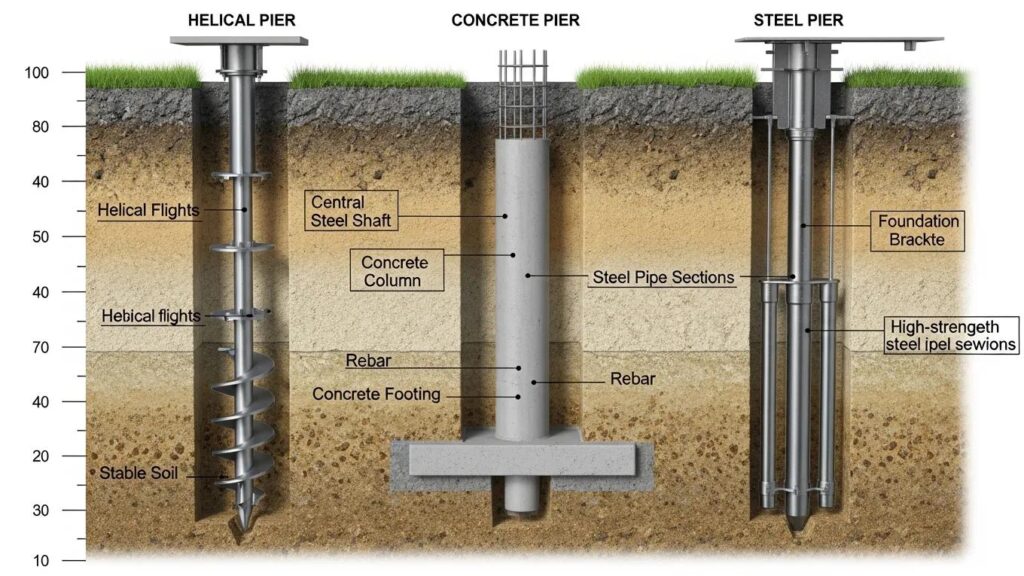
Piers come in several forms to suit different soils and loads, most commonly helical, concrete, and steel piers. Each type has specific strengths that make it a better fit depending on site conditions and the structure’s requirements.
How Do Helical and Concrete Piers Differ?
Helical piers are screw-like shafts driven into the ground; they offer fast, minimally disruptive installation and immediate support. Concrete piers are cast in place and require more excavation, so they’re often chosen for larger structures or where significant concrete piers movement is expected.
What Materials Are Used in Pier Foundations?
Piers are typically made from concrete, steel, or occasionally treated wood. Concrete is valued for durability and cost-effectiveness in residential work, while steel provides higher load capacity and strong resistance to long-term stresses.
What Are the Common Signs of Foundation Problems?
Spotting foundation issues early can reduce repair costs. Common indicators include: Common indicators
- Cracks in Walls: Vertical or horizontal cracks can signal foundation movement.
- Uneven Floors: Sloping or warped floors often point to uneven settling.
- Doors and Windows Not Closing Properly: Sticking or misaligned doors and windows can be caused by foundation shifts.
How Can Foundation Cracks Indicate Structural Issues?
Cracks differ by size and direction and can reveal their cause. Vertical cracks often indicate settling; horizontal cracks can show lateral soil pressure. Track any changes and seek a professional opinion if cracks worsen or multiply.
When Should Houston Homeowners Schedule a Foundation Inspection?
Houston homeowners should get an inspection if they see cracks, uneven floors, or doors that do not close properly. Also consider inspections after heavy rain or drought, since those events affect soil moisture and stability. Early checks can catch problems before repairs become more costly.
What Are the Typical Pier Foundation Repair Methods?
Repair approaches depend on severity. Common methods include underpinning to add support beneath the existing foundation and installing new piers to redistribute structural loads.
How Does Foundation Underpinning Work?
Underpinning strengthens a foundation by extending its support into deeper, stable soils. The process usually requires excavating beneath the foundation and then pouring concrete or installing piers to bear the load.
What Technologies Are Used in Pier Foundation Repairs?
Modern repairs use hydraulic jacks and engineered materials to raise, stabilize, and secure foundations more precisely and faster. Some contractors also install monitoring systems to track movement over time and confirm repair performance. For more details, visit our foundation repair process guide.
How Much Does Pier Foundation Repair Cost?
Costs vary with the extent of damage, chosen repair method and local market. Homeowners should expect roughly $1,500–$3,500 for basic repairs; more extensive work can exceed $10,000.
Research examines how to optimize foundation costs by weighing construction expenses against potential failure costs.
Foundation Cost Optimization & Failure Costs
This study computes the desired reliability level by minimizing total expected cost, including construction and expected failure costs. It considers three design parameters: the foundation’s length, width and the type and level of ballast.
Cost Optimal Design of a Bridge Pier Foundation, HO Madsen, 1992
What Factors Influence Pier Foundation Repair Pricing?
- Size of the Area Needing Repair: Bigger areas need more materials and labor.
- Type of Repair Method Chosen: Different methods carry different material and labor costs.
- Local Market Conditions: Local demand and labor rates affect final prices.
Are There Financing Options for Foundation Repairs?
Many repair firms offer financing, such as payment plans or home-repair loans. Ask about financing when you request estimates to manage costs more easily.
| Repair Method | Average Cost | Description |
|---|---|---|
| Underpinning | $1,500 – $3,500 | Strengthens existing foundation by extending it deeper into stable soil. |
| Helical Piers | $1,000 – $2,500 | Quick installation with minimal disturbance, ideal for residential applications. |
| Concrete Piers | $2,000 – $5,000 | Requires excavation and is suitable for larger structures. |
This table shows average costs for common pier repair methods to help homeowners compare options based on their needs.
Frequently Asked Questions
What are the benefits of using pier foundations over traditional foundations?
Pier foundations are effective where soils are unstable or expansive because they transfer the load to deeper, stable layers. That reduces settling and shifting risk. They also often require less excavation, so installation causes less disruption to the site.
How long do pier foundations typically last?
Lifespan depends on materials, soil and maintenance. Concrete piers often last several decades, commonly over 30 years. Steel piers can last even longer when protected from corrosion. Regular inspections and prompt repairs extend service life.
Can pier foundations be used in all types of soil?
Piers work in many soils, especially clay, sand and loose fills. Extremely rocky or very hard soils can make installation harder and may need specialised equipment. A soil analysis is essential before choosing a pier system.
What is the process of installing helical piers?
Installation starts with a site assessment to locate piers. Helical piers are then mechanically driven into the ground like large screws until they reach stable soil. They are connected to the foundation and provide immediate support; installations can often finish in a day.
How can homeowners maintain their pier foundations?
Maintain piers with periodic inspections and by watching for signs like wall cracks or uneven floors. Keep drainage directed away from the foundation to avoid water-related soil changes, and consult a professional at the first sign of trouble.
What should homeowners expect during a foundation repair project?
Expect a detailed assessment followed by excavation, pier installation or underpinning as needed. Repairs can cause noise and limited access in work areas. A reputable contractor will explain the timeline and steps so homeowners know what to expect.
Pier Foundation Solutions
Pier foundations offer a practical solution where surface soils are unstable, improving structural stability and reducing damage risk from shifting ground. Spot problems early and evaluate repair options to protect your investment. For further guidance, visit our resource page for detailed advice.